
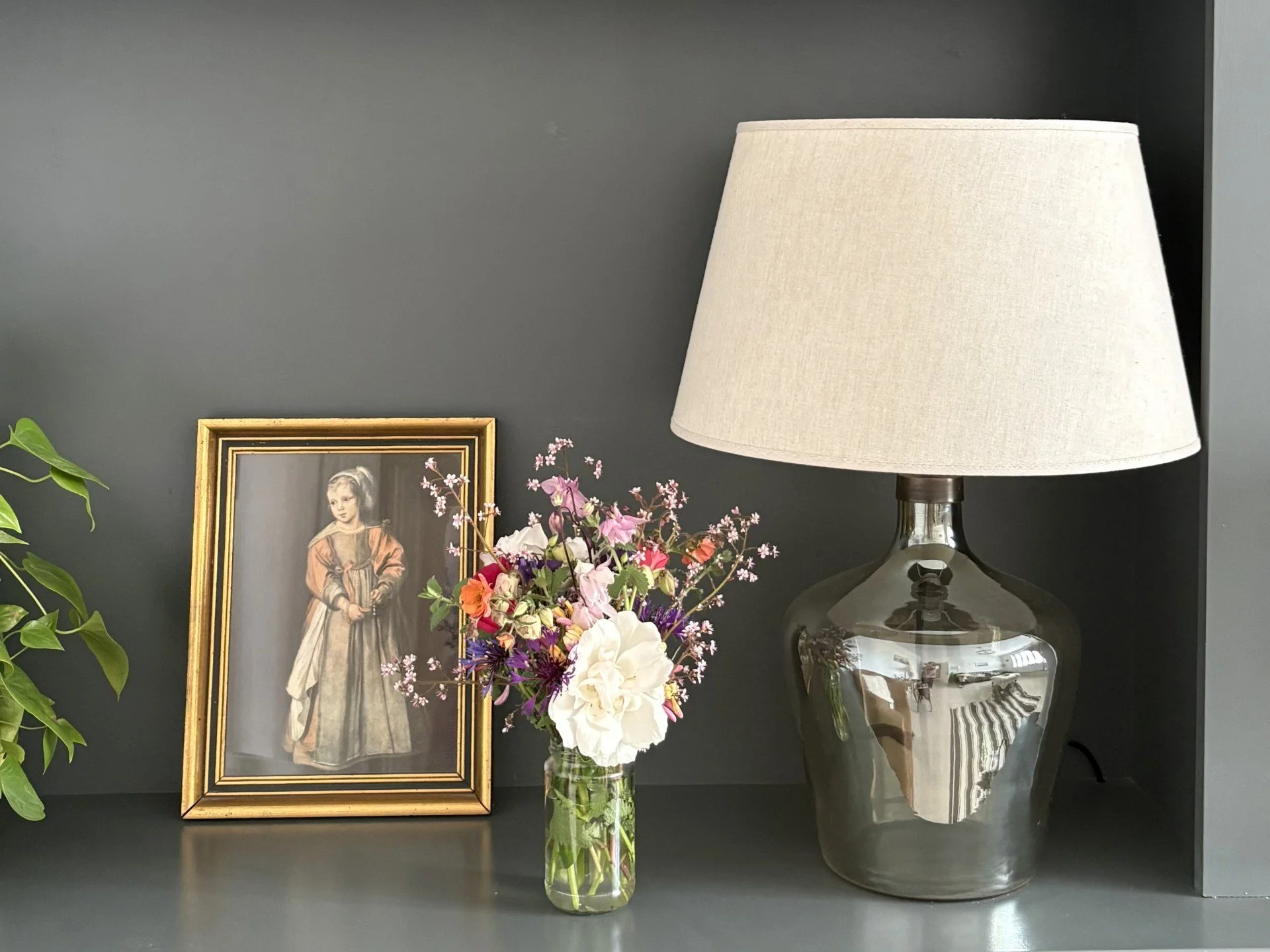
Most people sense when a room feels cold, unfinished or just isn’t working long before they can explain why. As an interior designer near Abergavenny, here are some of the questions I ask when I look at a space in a home: what’s already there, what’s missing, and what would make it work better?
The answer isn't always to buy more things or start again, but to understand what's affecting the way a room looks and feels, and what might make the difference.
How to add character to your home
Work with what you have, rather than trying to make your home into something it isn't. If your home has beautiful original features, you already have some of the building blocks for creating character. But many homes, particularly newer ones, don’t have those defining features. That doesn’t mean you’re at a disadvantage. You have more of a blank canvas to work with, which can make it harder to know where to start, but also gives you more freedom to create the look and feel you want.
Look at what your home does have to offer. Perhaps the rooms have lovely proportions, a hallway has an uninterrupted wall that would work well for furniture or artwork, or an awkward corner in a bedroom that could be put to better use with built-in storage. These details might not seem significant on their own, but they can help guide your decisions and give you a starting point for creating a home with character.
How to choose colours for your home
If you're completely stuck on which colours to choose, look at what you wear. Are you naturally drawn to muted hues, pastels, strong colours, earthy tones or black? If you're comfortable wearing a colour, you can probably live with it in your home too. It's a bit like knowing which colours flatter you. But, just as with clothes, it's worth considering whether the colour actually suits its surroundings. Think about how the colour will work in your room. Natural light can change how a colour looks, as can the direction the room faces and the colours of your flooring and furnishings. Cooler light can bring out different tones than warmer light, so it’s worth looking at how a colour changes throughout the day and how it sits alongside the materials and colours you already have, rather than choosing it in isolation. Try not to choose a colour just because it's fashionable. Your eye may subconsciously have adjusted to certain colours and combinations that are current and that you're seeing everywhere you look (chocolate brown or burgundy and powder blue I’m looking at you!). If you love it, then go for it. But if you remain on the fence, it may be a sign that you could feel fed up with it long before the next trend arrives or you feel like refreshing your room again!
Remember also that colour can be introduced without painting every wall. It can come through patterned fabrics, curtains and blinds, furniture, painted joinery, artwork or smaller accessories and details.
How to make a room feel warmer and softer
Sometimes a room feels echoey, empty or cold, but you’re not sure why. Have a look around. Do you have lots of glass, tiles, hard floors, metal or glossy surfaces? Newer houses can have an awful lot of hard surfaces, which can leave a room feeling rather stark.
Think about introducing a better balance of textures. Upholstery, wood, wool, linen and velvet can all bring something different to a room, as can rugs and softer, curved shapes such as a sofa or chair. If your furniture, flooring and surfaces are all smooth and hard, for example, a textured fabric, a wool rug or some natural wood can soften the overall effect. It’s not about adding every material or filling the room with more things, but finding a mix that makes it feel more comfortable and welcoming.
If you have blinds, think about also adding some curtains. They bring another layer of softness, as well as helping to absorb sound and providing warmth, physically and metaphorically! They're also a way to bring colour and pattern into a room, whether you want them to sit in the background or become a feature. Just don't be mean with the curtain fabric width, as there is nothing worse than scrimpy-looking curtains!
How to make your home feel more personal
Don’t buy things simply because you think your room might need them. This is particularly important with artwork. It’s easy to end up with whatever you keep seeing in the shops and magazines, whether that’s botanicals, vintage animal prints or the latest style. Unless you genuinely love something, keep looking until you find something that really makes your heart sing. It could be a painting, photograph, print, drawing or even a treasured piece of your own or your children’s artwork, framed and given a place on the wall. It doesn’t need to match the room perfectly or be fashionable. You just need to like it!
The same applies to furniture and accessories. Use things you already own if you like them. Your home really doesn’t need to be filled with things bought specifically for that room or to follow a fashion. If something brings you joy or has a special meaning, it will make your home feel far more personal and enjoyable to live in than something you’ve bought simply to fill a space.
How to make a room feel cohesive, not like a showroom
Choosing things you love is a good starting point, but it's also worth looking at how they work together. You can have lots of lovely individual pieces and still find that a room doesn't quite hang together. Too many competing colours, patterns or styles can make it feel busy and visually chaotic. At the other end of the spectrum, if everything matches perfectly, the room can feel a little like a showroom.
You don't need everything to match, and you don't need to make everything different. The trick is to find a balance. Are there colours, materials or shapes that you could repeat to create a sense of cohesion? Is there enough contrast to give the room interest, without everything competing for attention? For example, you might repeat a colour from your curtains in a lampshade or a piece of artwork, or bring a similar wood tone into different parts of the room. Repeating colours or materials helps create a connection between individual pieces, while introducing a contrasting texture, shape or older piece of furniture can stop everything feeling too uniform.
How to decorate a new home without buying everything at once
It's particularly tempting after moving to try to fill those empty walls and corners and style every space to show off your lovely new home. But I'd advise against trying to finish the house immediately. Instead, try living in it for a while first.
What's great, what annoys you and what's missing? Notice which seat has the best view, which surfaces get a pile of 'stuff' naturally accumulating, which room everyone gravitates towards and how the light changes throughout the day. Give yourself time to notice, because that information is incredibly useful. It tells you what the house actually needs, rather than what you think it needs simply because there's an empty space.
Making a house feel like a home isn’t about filling every space or getting every detail right. It’s about understanding what you like, how you live and how the different elements of your home work together to make it feel right for you. Sometimes a small change can make all the difference. Other times, you need to look a little deeper to work out what’s missing or what isn’t quite working. Learning to look at your home in this way helps you make choices that feel right, rather than simply buying things to fill a space.